
In this project
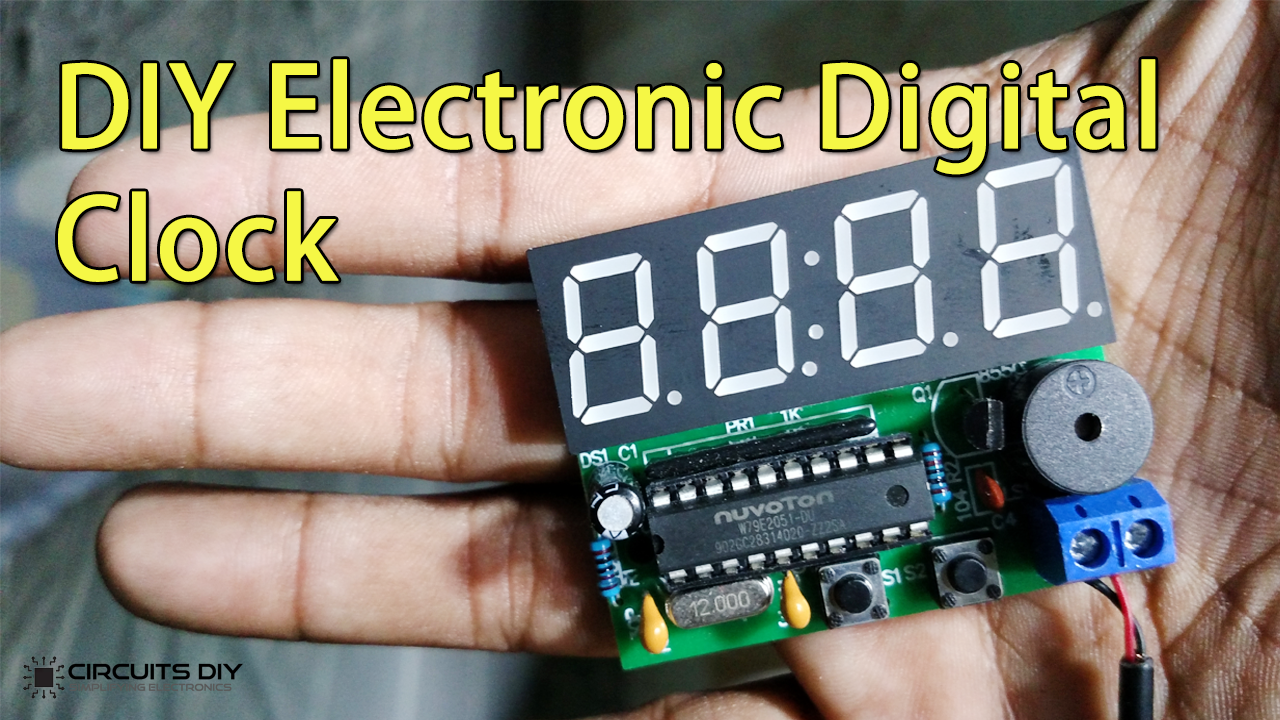
An Electronic digital clock is generally a timepiece that represents time digitally, as opposed to an analog clock that comes with a mechanical fitting to represent time instances. Digital clocks have found their uses in almost every walk of our lives & are seen in a great number of places such as homes, hospitals, schools & offices, etc. So, in this article, we will design a 4-bit Electronic Digital Clock using the Atmel AT89C2051 controller.
Hardware Components
Following are the necessary components required for making this DIT Electronic Digital Clock
| S.no | Component | Value | Qty |
|---|---|---|---|
| 1. | PCB Electronic Digital Clock | - | 1 |
| 2. | Resistor | 10k 2x | 2 |
| 3. | Ceramic Capacitor | 30pf,100nf | 2,1 |
| 4. | Electrolytic Capacitor | 10uf | 1 |
| 5. | Resistor Pack | 1k | 1 |
| 6. | Crystal Oscillator | 12Mhz | 1 |
| 7. | Transistor | 8550 | 1 |
| 8. | Tactile Switch | 2x | 2 |
| 9. | IC Socket | 20 Pin | 1 |
| 10. | Microcontroller | W79E2051 | 1 |
| 11. | Buzzer | - | 1 |
| 12. | 7 Segment Digital Display | - | 1 |
| 13. | DC Connector | - | 1 |
| 14. | Power Supply | 5v | 1 |
Circuit Diagram
Steps
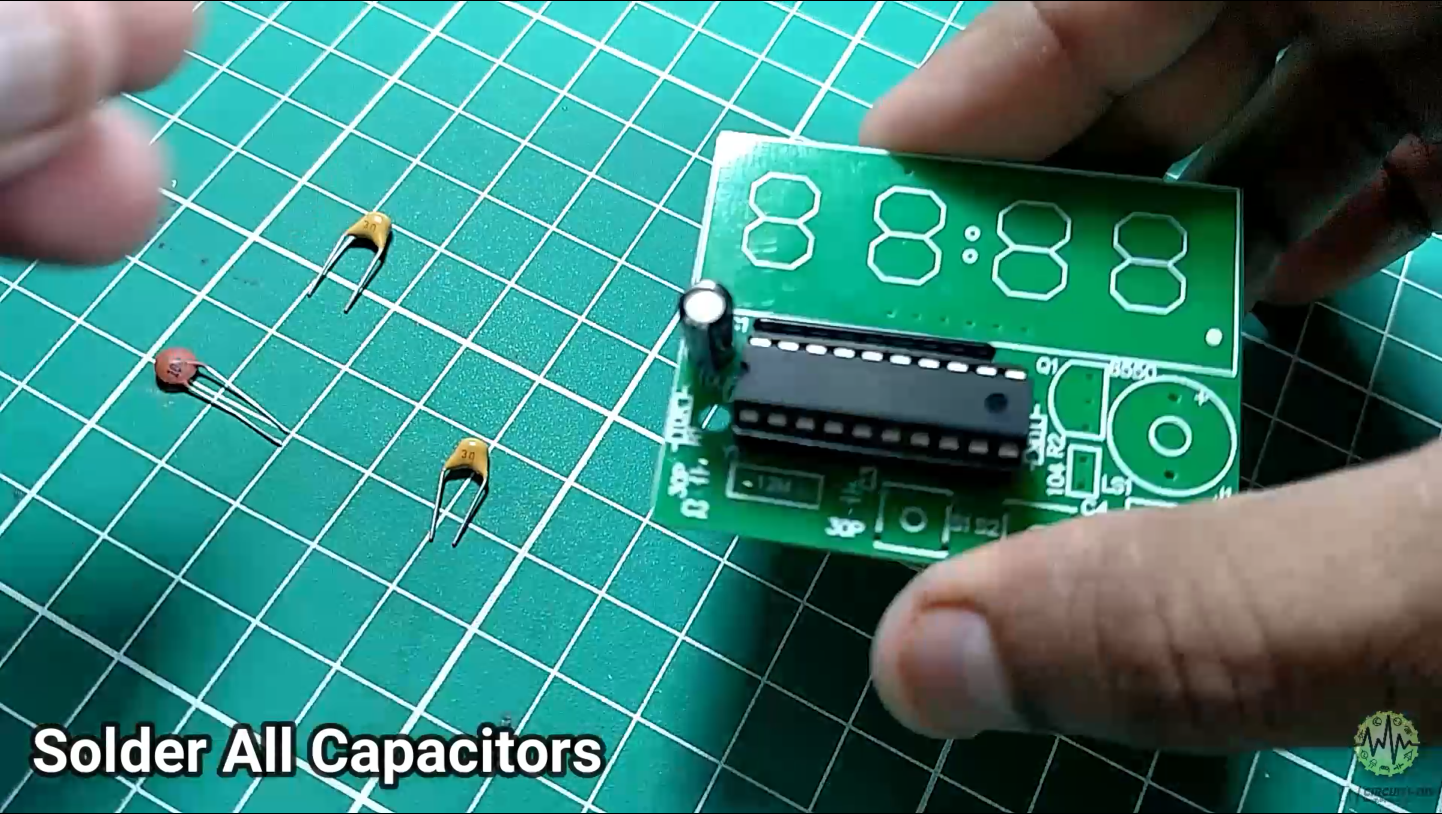
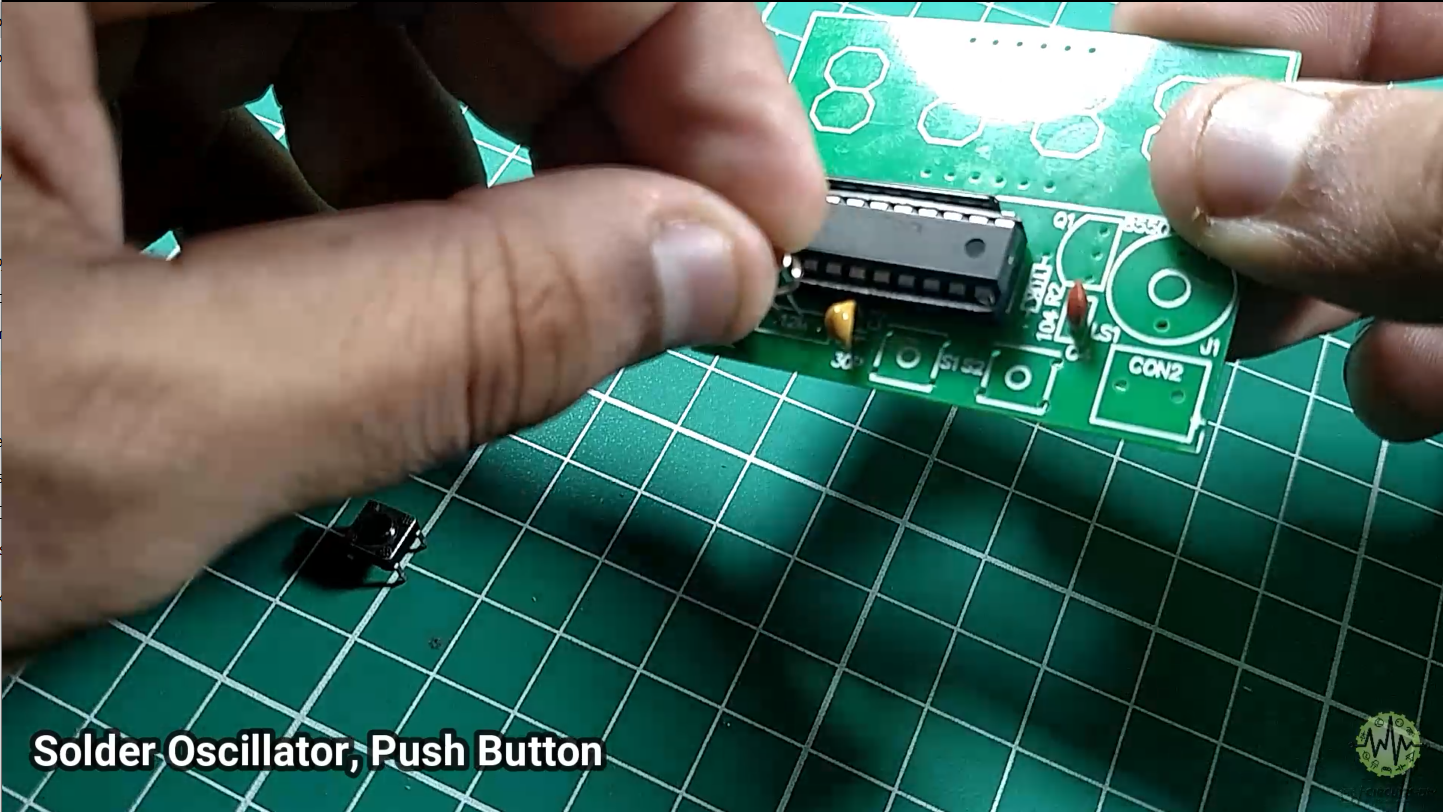
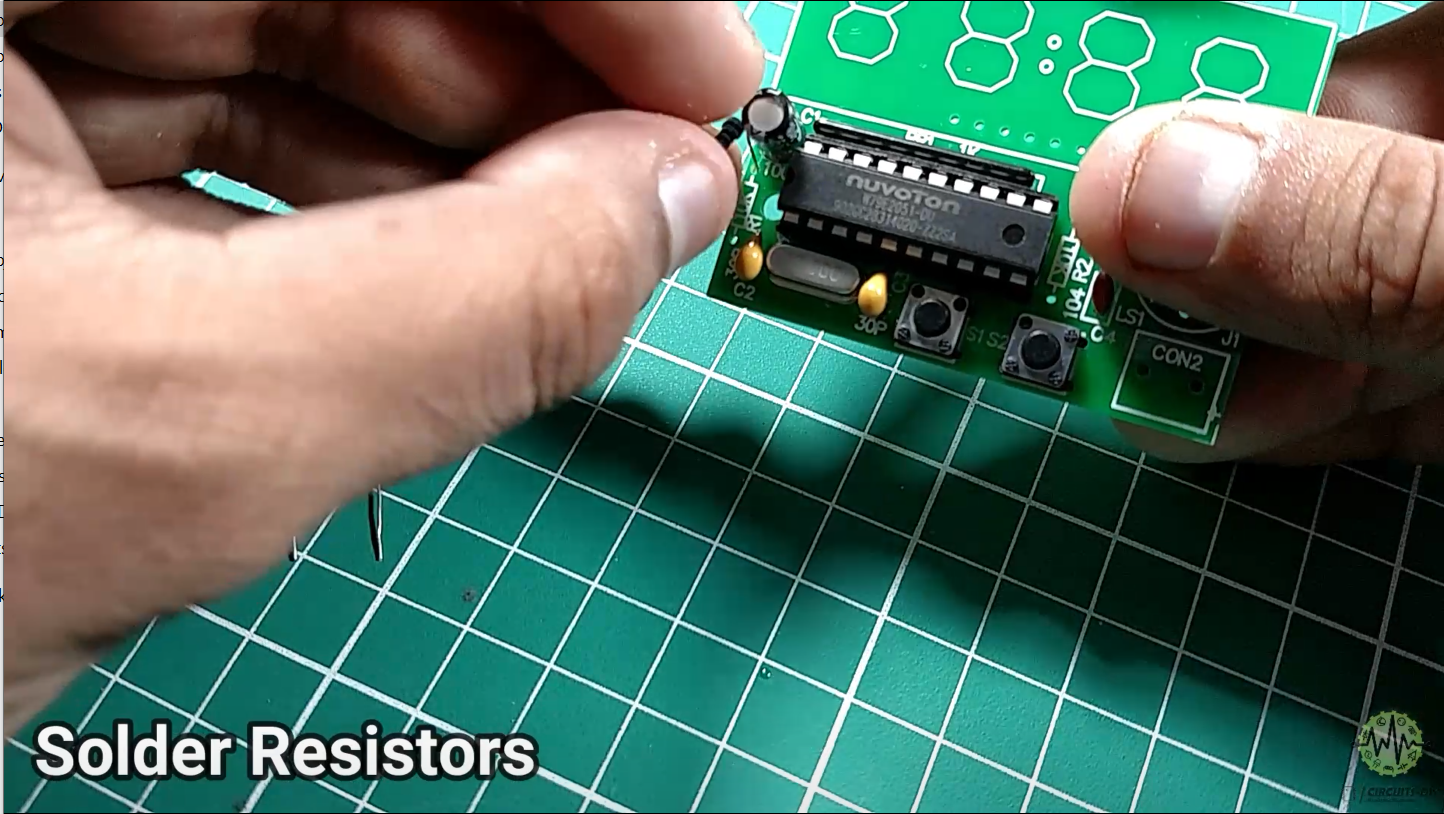
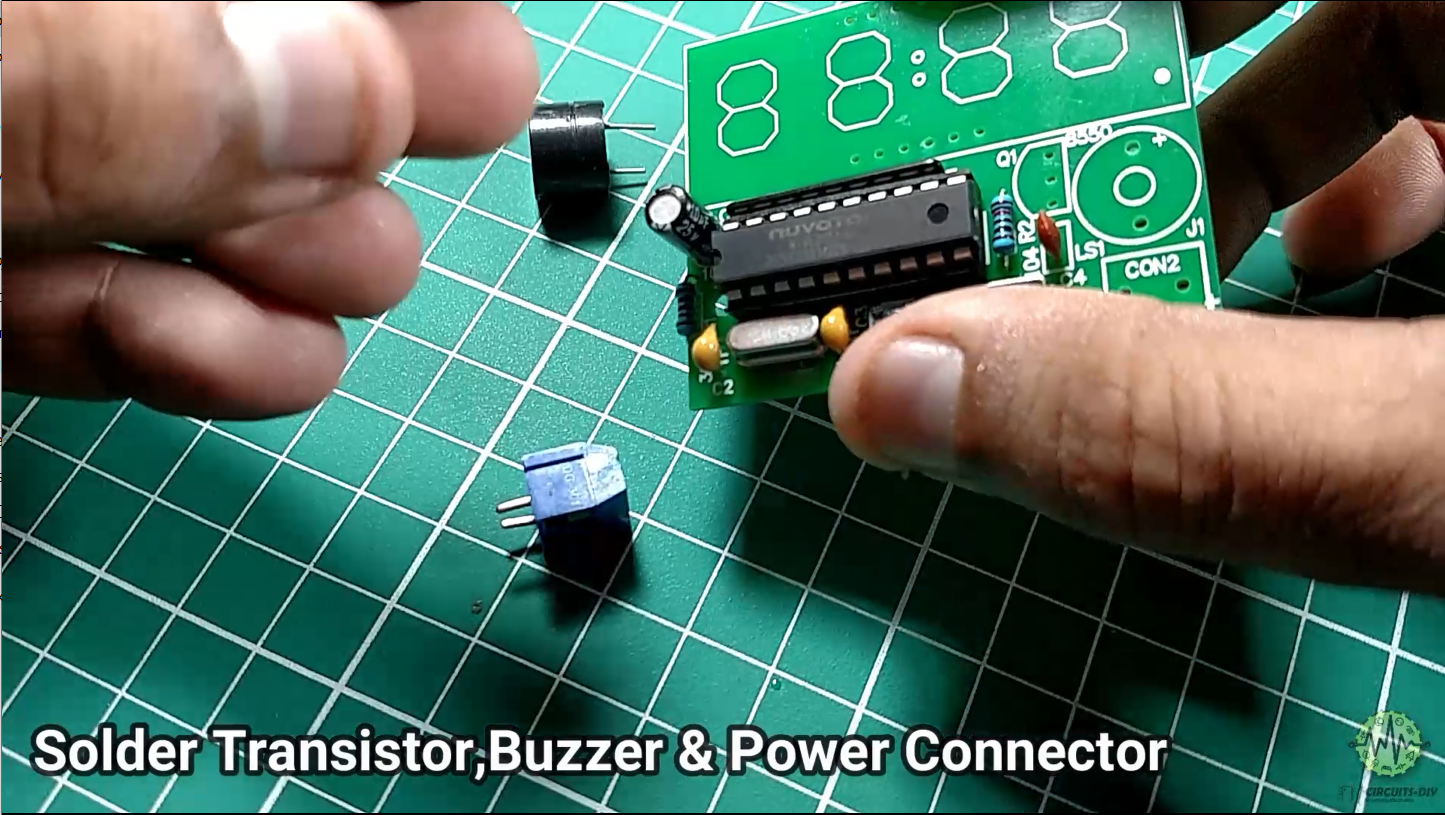
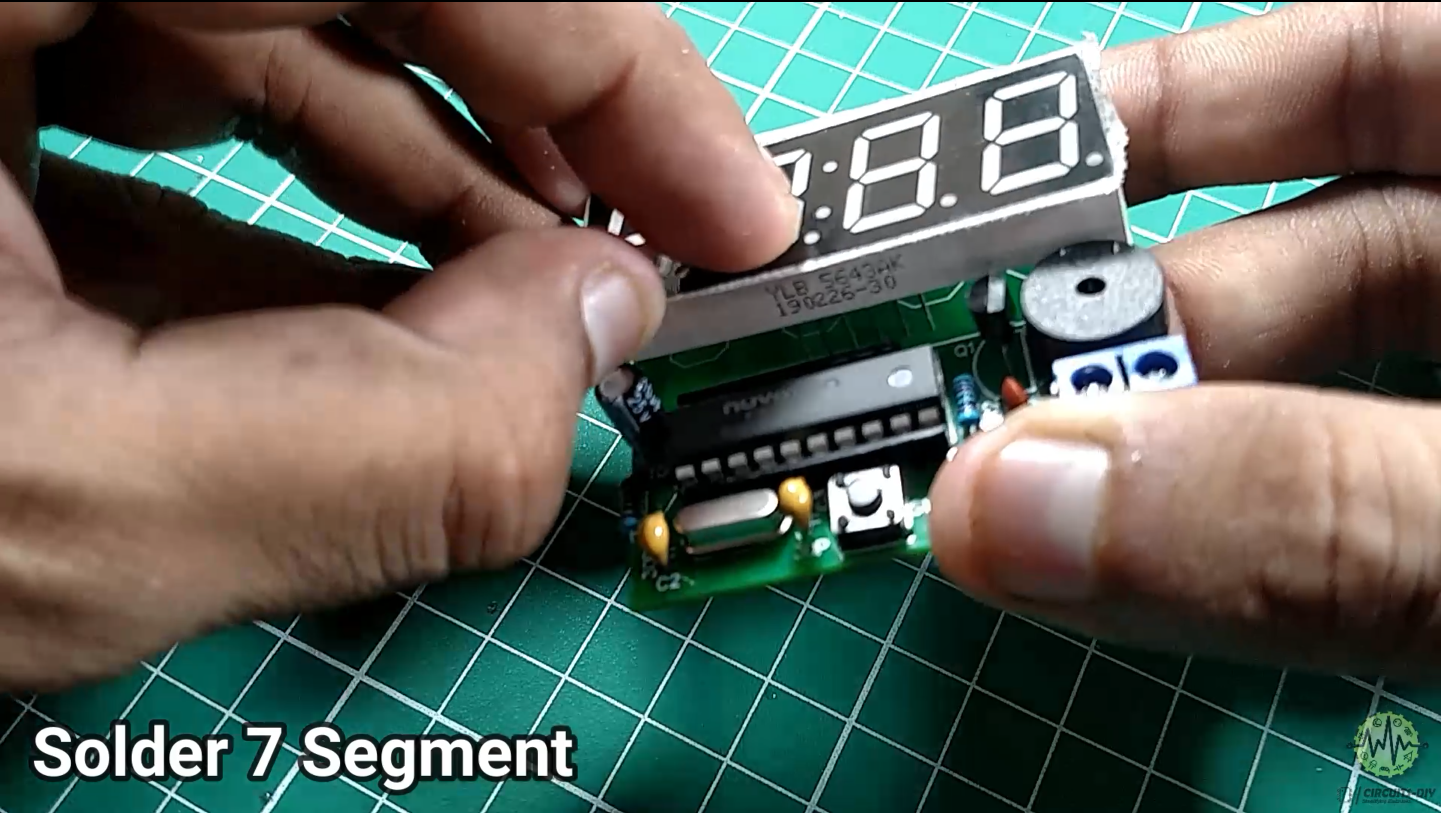
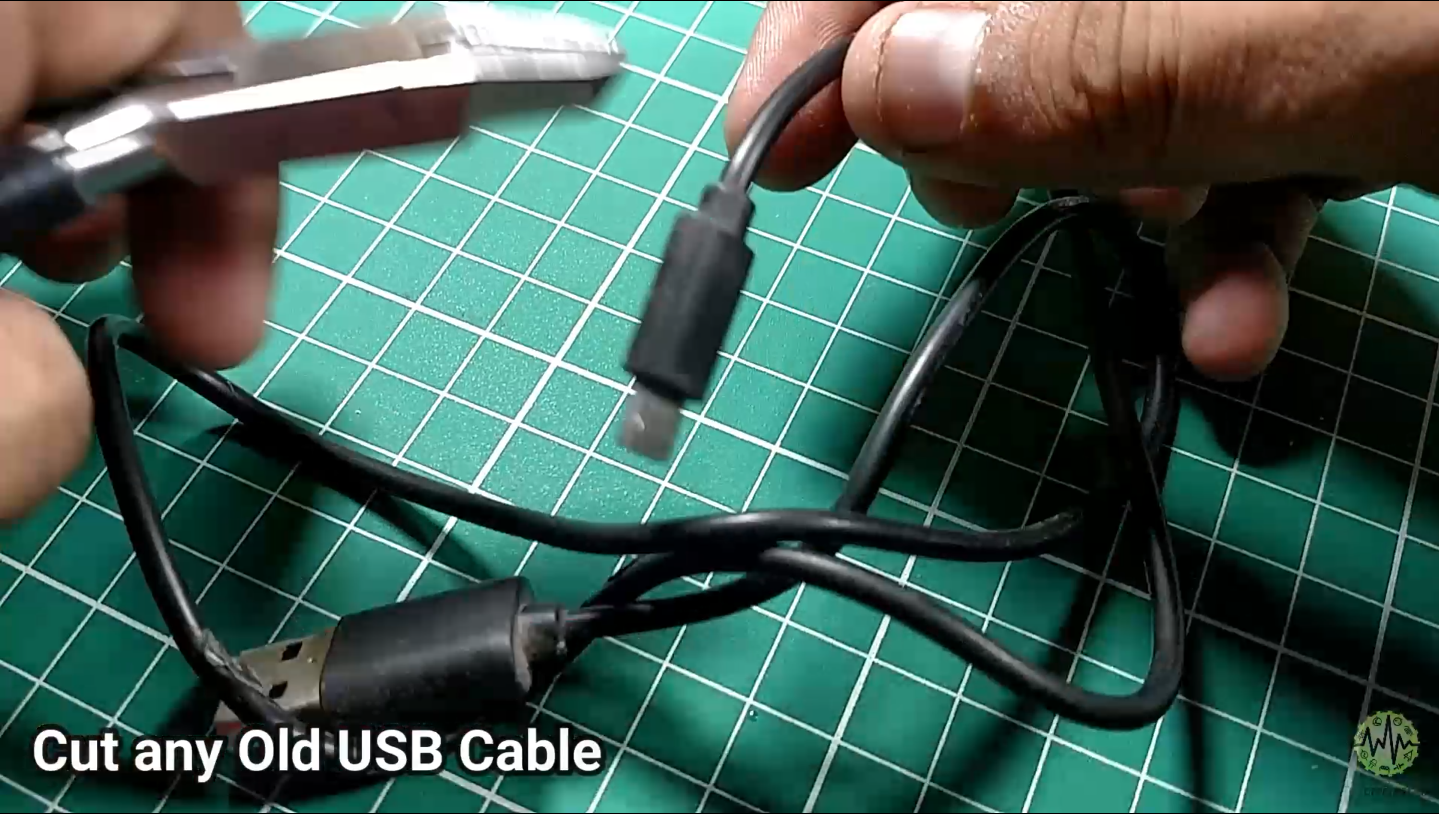
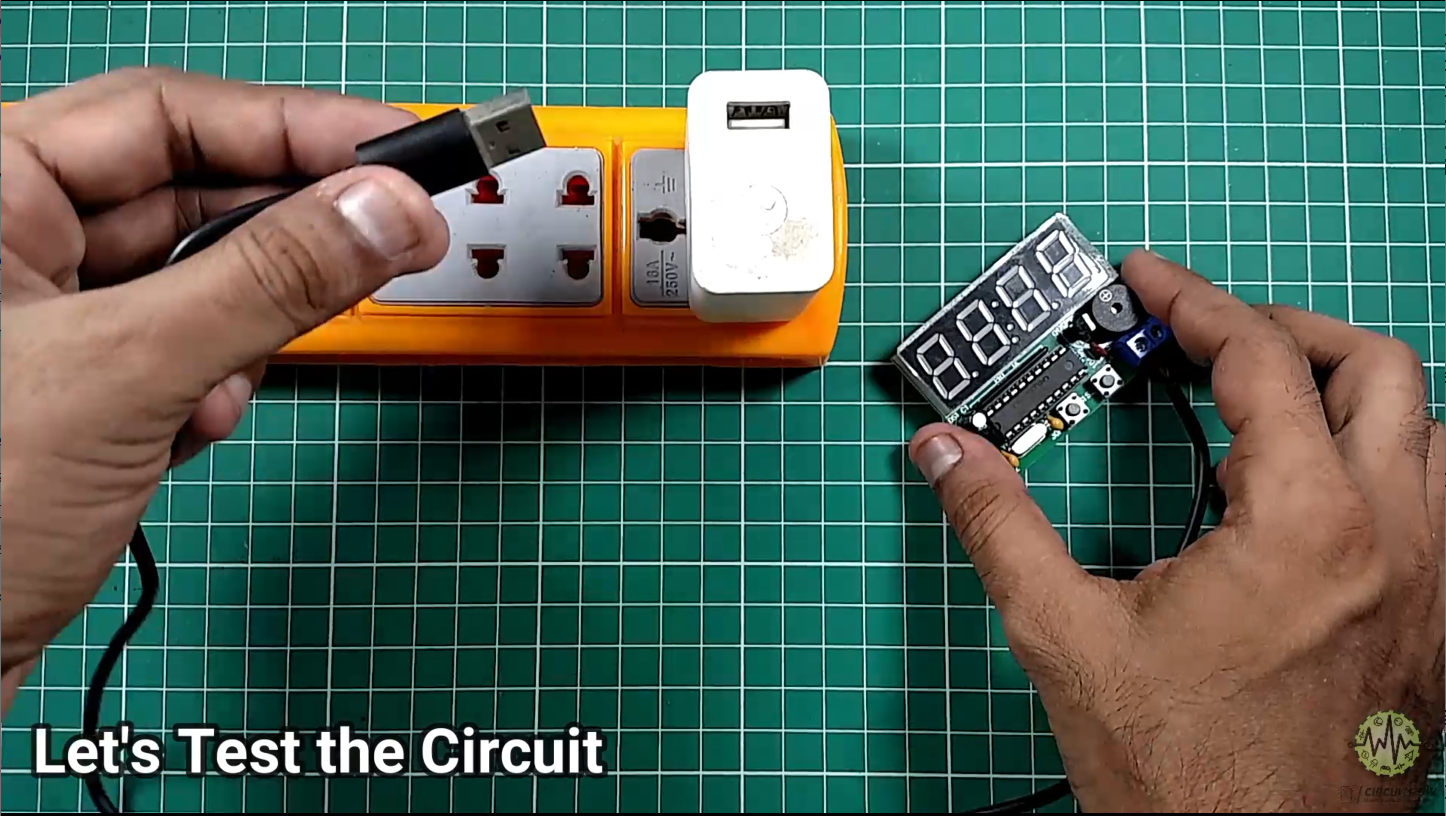
Working Explanation
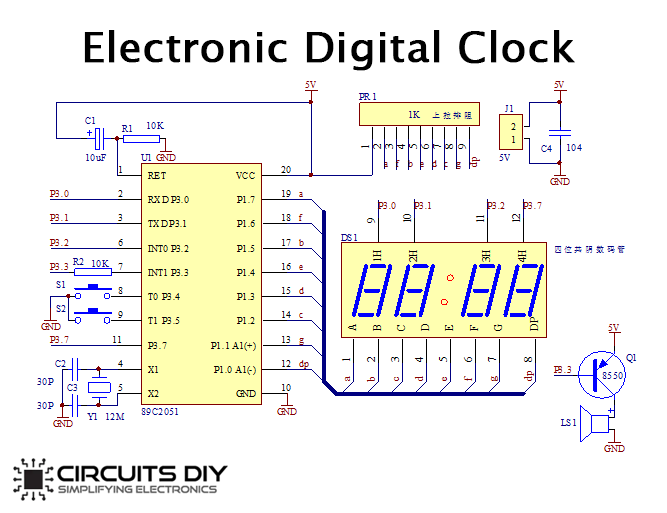
The working of this circuit is as follows, On powering the circuit through a 5V DC supply, the collector output through a PNP transistors goes to the bi-directional I/O pin P3.3. This also sets the clock to 12:59 at the start of each instance. Bi-directional pin P1.0 to P1.7 serves as the input to the 7 - segment display connected in series to the 1K pull up resistor pack.
The switches S1 & S2 can be used to set the time & alarm of the digital clock. the circuit requires a continuous CLK input of 1Hz to run the 8051 IC properly, which is provided using a crystal oscillator connected between the X! & X2 pin along with 30pF capacitors.
Applications
- They work as important timepieces in places such as schools, libraries, offices, homes & health care facilities, etc.
- It is also used to set timers & alarms for important events.


Discussion
Be the first to comment