

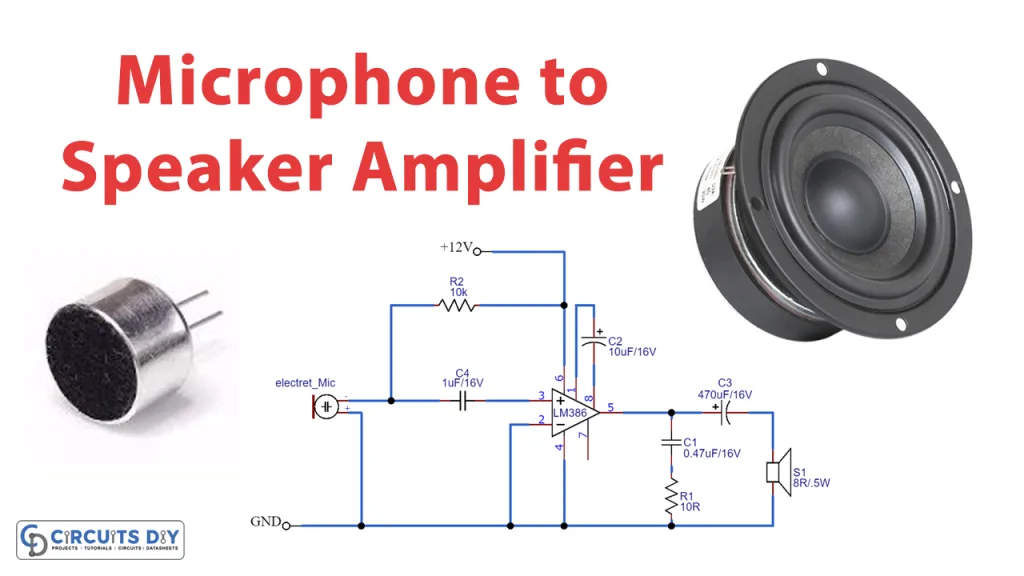
What is a microphone?
The microphone is an electrical component (transducer) device that converts sound energy into electrical energy. Microphones are often referred to as MIC. A microphone is used to save some sort of sound and produce an electrical signal as an output.
A microphone has a sensitive component that converts the changes in air pressure produced by the sound wave into an electrical signal. Depending on the method to convert the sound wave into an electrical signal, there are various types of microphones are available. The most common types are Dynamic Microphones, Condenser Microphones, Piezo electrical microphones, etc.
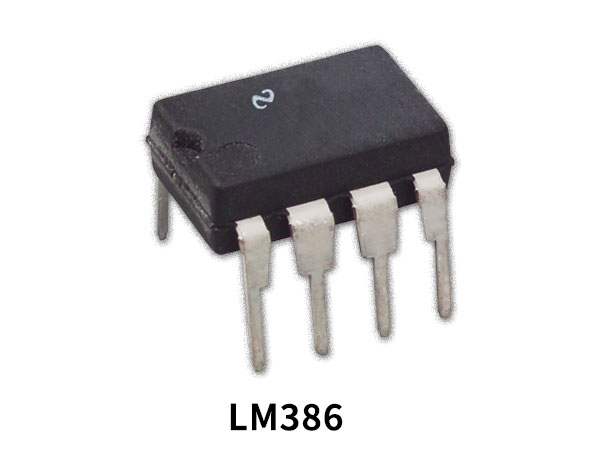
Bill of Materials (BOM)
The following components are required to make Speaker Amplifier Circuit
| Component | Value / Part No. | Qty |
|---|---|---|
| Breadboard | - | 1 |
| Audio Amplifier IC | LM386 | 1 |
| Electrolytic Capacitor | 10uF, 470uF | 1,1 |
| Resistor | 10R, 10K | 1, 1 |
| Speaker | 8 ohms | 1 |
| Ceramic Capacitor | 0.1uF, 0.047uF | 1, 1 |
| Condenser Mic | - | 1 |
LM386 Pinout
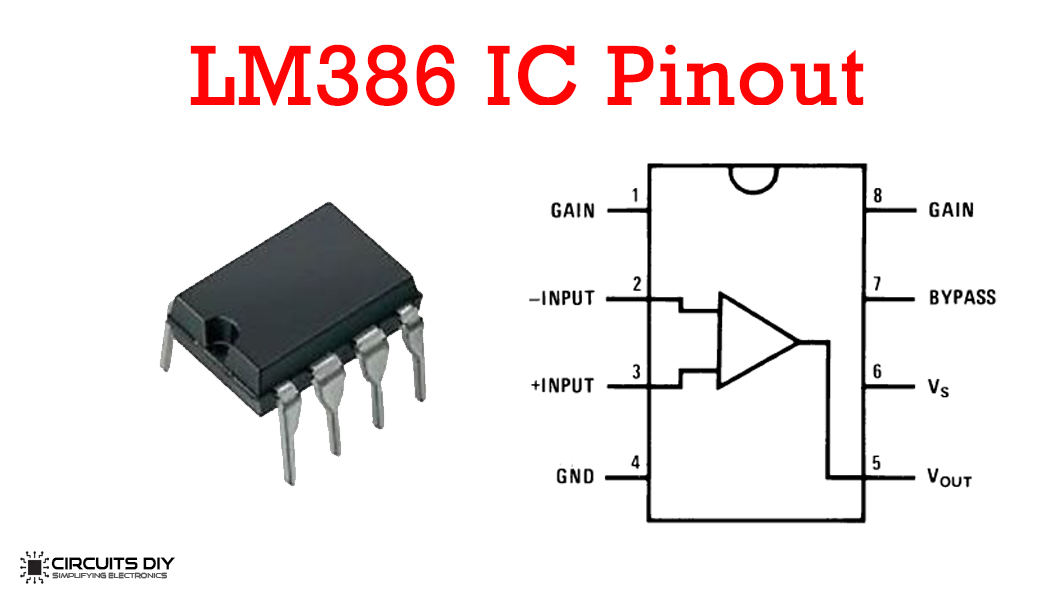
For a detailed description of pinout, dimension features, and specifications download the datasheet of LM386
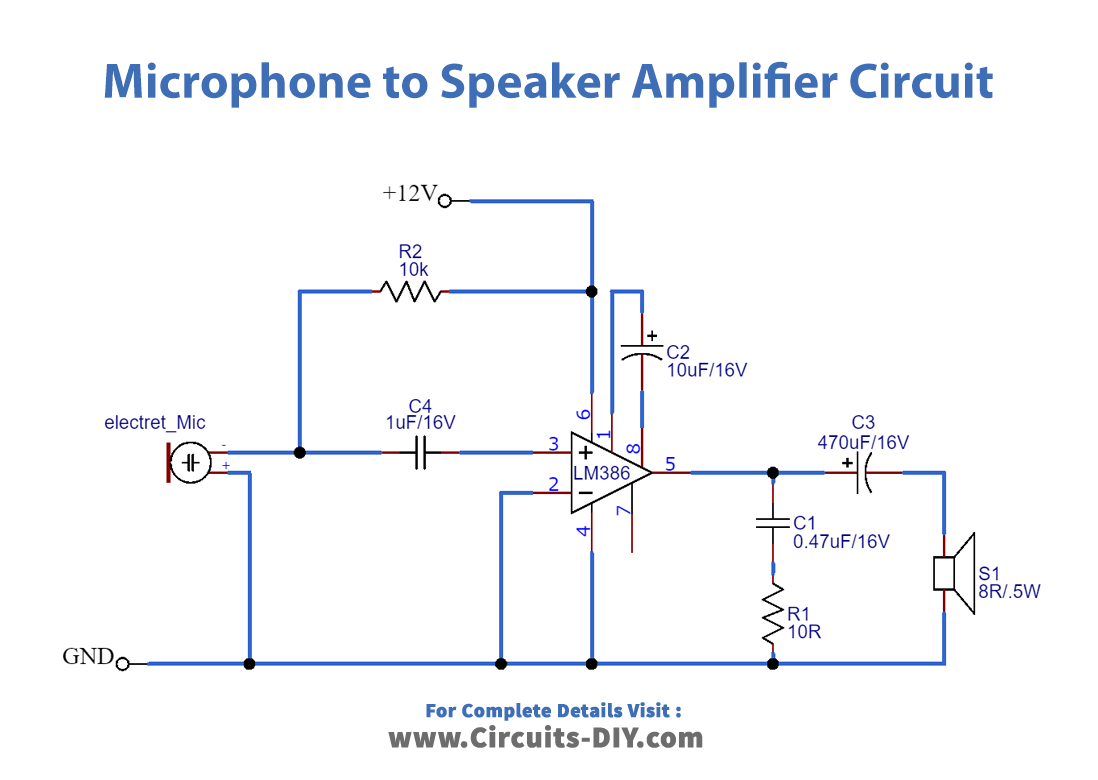
Circuit Diagram
Working Explanation
In the circuit diagram, the Amplifier is shown with the respective pin diagrams. The amplifier will provide 200x gain at output depending on the input. The 10uF capacitor across pin 1 and pin 8 is responsible for the 200x gain of the amplifier. The 250uF capacitor is connected across the Speaker. There is a 0.05uF capacitor along with a 10R resistor. This RC combination is called a snubber or clamp circuit which protects the amplifier from back EMF, produced by the speaker. We used a common but close value of 0.047uF instead of 0.05uF.
Tips
Some tips for the better working of the circuits:
- Construct the circuit in a PCB.
- Use a potentiometer to adjust the gain of the microphone.
- Connect a long wire across Speaker and keep it at a larger distance from the microphone. The feedback will be lower.
- Use additional filters to get clean sound output.
- Use a proper low-ripple power supply unit.

Discussion 1
Join the discussion